
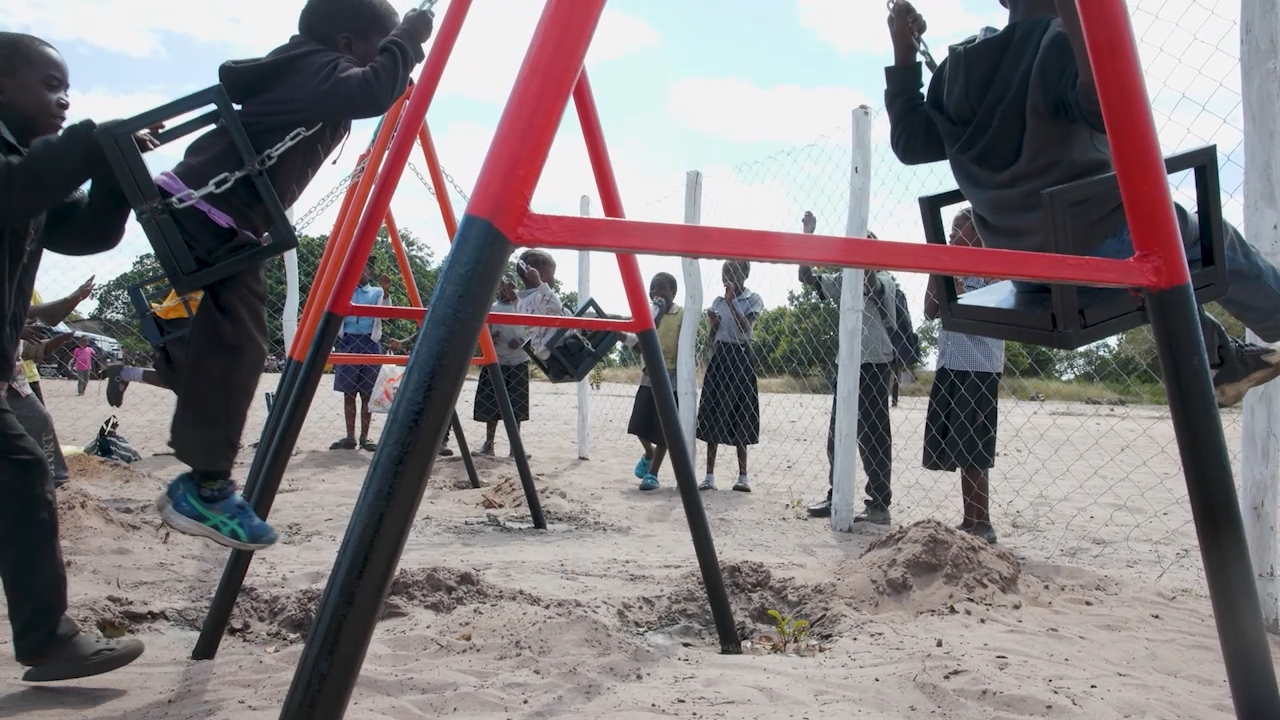
"At first, when men were walking with children, people thought they had been given a love potion by their wives. But now these things have stopped, because everyone regards it as normal." — A woman in Mulanje District, Malawi
That shift to a new norm is what community-driven change looks like when it works. It is also one of the clearest results of a seven-year early childhood development (ECD) initiative led by nine community-based organizations (CBOs) in Malawi and Zambia. In both countries, the share of men actively involved in caring for young children roughly doubled or more.
The evaluation findings show that when community-based organizations work closely with families and local structures, big changes can show up in everyday caregiving practices, children's learning environments, and attitudes about who is responsible for young children.
A key finding in both countries found that households directly visited by CBOs outperformed non-visited households across nearly every indicator. That suggests that community engagement is not an add-on to ECD programming but essential to effecting change.
Changes in health: In Malawi, the proportion of caregivers recalling at least two pieces of health advice received at under-five clinics increased from 63.4% to 91.6%; in Zambia, it rose from 69.1% to 87.6%. More importantly, knowledge increasingly translated into action: application of that advice rose from 39.1% to 66.2% in Malawi and from 61.6% to 86.8% in Zambia.
Changes in early learning: Early learning opportunities expanded, with supported community-based childcare centres increasing from 16 to 32 in Malawi and from 2 to 18 in Zambia. In Zambia, the use of play materials made from locally available materials rose from 49.5% to 87.3%. Caregivers described learning to make toys from materials already around them—turning early learning into something that could happen at home, not only in a centre.
Changes in gender and care norms: In Malawi, the proportion of men responsible for or involved in childcare rose from 23.6% to 72.5%. In Zambia, daily male caregiver involvement increased from 36.8% to 78.0%, while the proportion reporting no male involvement fell from 43.7% to just 1.6%. These numbers represent more than a change in behaviour. They suggest that community dialogue and engagement can help make new social norms feel possible—and eventually normal.
Changes in participation and responsibility: Perhaps equally important, communities were increasingly positioned as owners of the work. More than 82–85% of households reported feeling actively involved in transition decisions, understanding expected outcomes, and feeling capable of continuing activities with minimal CBO input. Self-managed childcare committees, care groups, local revolving funds and deliberate withdrawal exercises demonstrated that communities could sustain elements of the work beyond direct CBO support.
Systemic limitations: But the endline findings are valuable precisely because they show where community action can get stalled—and where wider systems must respond.
In Malawi, for example, access to improved drinking water and safe water storage improved substantially, while access to improved non-shared toilets remained very low. At ECD centres, WASH infrastructure remained difficult to sustain. Nutrition gains were constrained by drought, economic hardship and disruptions to food access. The lesson is clear: knowledge and motivation matter, but families also need the resources and local services that make healthy practices possible.
In Zambia, birth registration fell from 74.9% to 56.2% amid delays at the National Registration Office. When families repeatedly provide documents but do not receive the expected outcome, frustration can be directed at the CBO—even when the barrier sits entirely outside its control.
Community-led action therefore needs to be accompanied by deliberate coordination with, and advocacy for, the systems communities depend on.
Sustaining results means supporting CBOs: There is another important sustainability lesson. Communities demonstrated growing capacity to manage and continue activities, yet the CBOs themselves face serious organizational risks when external programme funding ends.
This raises a question for funders: if we want community-led systems change to last, should we be funding only the program—or also the organizations and relationship cultivation that make community leadership possible?
For Firelight, the findings reinforce several principles of community-driven systems change. Community ownership requires real responsibility, not simply consultation. Behavior change is more likely to last when paired with tangible resource support. Community-level demand needs to be met with stronger vertical integration into government systems. And the sustainability of local organizations matters alongside the sustainability of individual interventions.
The broader lesson: Communities can – and do – drive meaningful change for young children. But community organizations cannot, on their own, fix drug supply chains, absorb caregivers into government payrolls, process birth certificates, or overcome the effects of poverty and climate shocks.
The broader implication: How can funders, governments and practitioners create the conditions for community-led work to reach more children, endure beyond a grant period, and become part of stronger local and national systems?
There is a clear need to expand this kind of work. As one Zambian government stakeholder put it: "What we reach, it's just a drop in the ocean."
Recommendations:
For funders: Fund CBO organisational sustainability, not just programmes
For governments: Accelerate payroll absorption of ECD caregivers; fix supply chains; reduce registration delays
For practitioners: Pair behaviour change with tangible resource support; address institutional WASH; diversify early learning activities
If we want community-led change to last, investment must go beyond short-term programme delivery to strengthen the organizations, local structures and government relationships that enable communities to lead.
We invite you to read further:
Five recommendations for strengthening the capacity of CBOs
We also offer three case studies of our CBO grantee-partners:
Nachikodowa: The Chicken Nobody Gave Them
Malilima: The Rules Nobody Wrote
COHO: Building Walls, Then Letting Go (Children of Hope)
With thanks to Impact Managers, our evaluation partners.
